
How to Stop Doomscrolling – 12 Science-Backed Strategies to Reclaim Your Time and Mental Health

Introduction
Have you ever picked up your phone to check one notification and, before you knew it, an hour had disappeared? You kept scrolling through bad news, social media posts, or endless videos- even though it made you feel anxious, tired, or overwhelmed.
This habit is called doomscrolling, and millions of people struggle with it every day.
The good news? Doomscrolling isn’t a sign of laziness or weak willpower. It’s a habit that can be changed with the right strategies.
In this guide, you’ll learn what doomscrolling is, why it happens, how it affects your mental health, and practical ways to stop it naturally.
What Is Doomscrolling ?
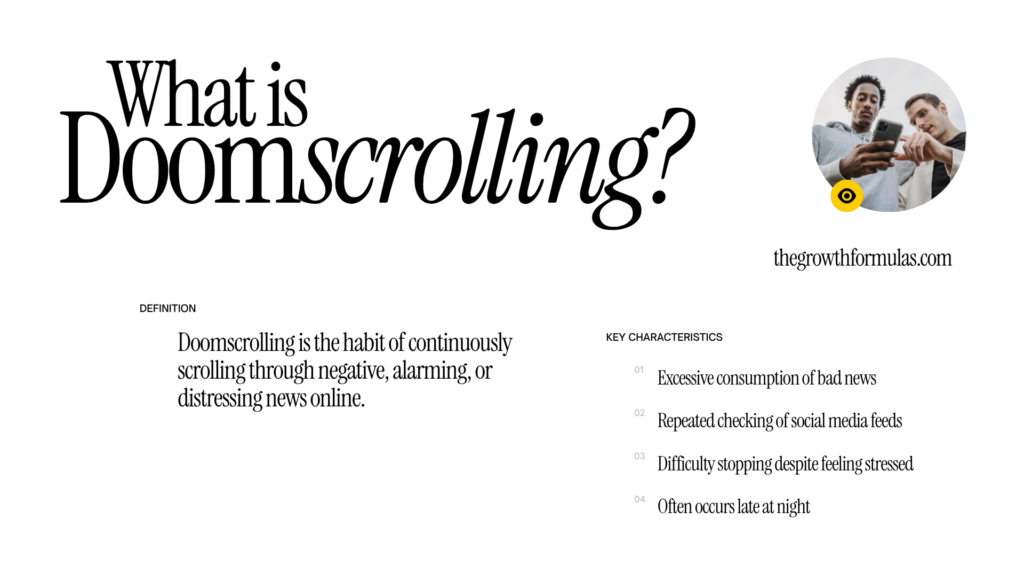
Doomscrolling is the habit of continuously consuming negative or emotionally intense content online, especially through social media, news websites, or short-form video apps.
People often continue scrolling even when they know it’s making them feel worse.
Common platforms include:
- X (formerly Twitter)
- TikTok
- YouTube Shorts
- News websites
Why Do We Doomscroll?
Our brains are naturally wired to notice potential threats.
Psychologists call this the negativity bias– our tendency to pay more attention to negative information than positive information because it once helped humans survive.
Modern apps make this even stronger by using infinite scrolling, personalized recommendations, and constant notifications.
Every swipe promises something new, keeping your brain searching for the next piece of information.
Signs You’re Doomscrolling
You may be doomscrolling if you:
- Lose track of time while using your phone.
- Feel anxious after scrolling.
- Check social media immediately after waking up.
- Keep reading bad news even when it hurts your mood.
- Struggle to stop scrolling.
- Feel mentally exhausted after using your phone.
How Doomscrolling Affects Mental Health
Research suggests excessive doomscrolling may contribute to-
Increased Anxiety
Constant exposure to stressful information keeps your brain in a heightened state of alertness.
Higher Stress Levels
Negative news can increase cortisol, the body’s primary stress hormone.
Poor Sleep
Late-night scrolling exposes your eyes to blue light while also stimulating your brain, making it harder to fall asleep.
Reduced Productivity
Frequent interruptions reduce concentration and make deep work difficult.
Lower Mood
Consuming large amounts of negative content can make the world seem more dangerous than it actually is.
11 Practical Ways to Stop Doomscrolling
1. Set Daily Screen Time Limits
Use your phone’s built-in Screen Time or Digital Wellbeing features.
Start with a realistic goal like reducing social media by 20–30 minutes per day.
2. Remove Unnecessary Notifications
Most notifications are not urgent.
Turn off alerts from:
- Social media
- Shopping apps
- News apps
- Entertainment apps
Only keep essential notifications.
3. Don’t Start Your Day With Your Phone
Avoid checking your phone for the first 30 minutes after waking up.
Instead:
- Drink water
- Stretch
- Read
- Journal
- Go for a short walk
4. Create Phone-Free Zones
Keep your phone away from:
- The dining table
- Your bedroom
- Study sessions
- Family time
Physical distance makes scrolling less automatic.
5. Replace Scrolling With Better Habits
Whenever you feel the urge to scroll, try:
- Reading one page of a book
- Walking for five minutes
- Listening to music
- Practicing deep breathing
- Writing in a journal
Replacing a habit works better than simply trying to quit.
6. Follow Positive Accounts
Your feed shapes your mindset.
Unfollow accounts that consistently leave you feeling anxious, angry, or emotionally drained.
Instead, follow creators who educate, inspire, or genuinely make your day better.
7. Limit News Consumption
You don’t need to check the news every hour.
Choose one or two reliable news sources and check them once or twice a day.
Staying informed doesn’t require constant updates.
8. Use App Timers
Most smartphones allow you to set daily limits for specific apps.
Once the timer expires, treat it as a reminder to take a break.
9. Keep Your Hands Busy
Many people scroll simply because they’re bored.
Try:
- Drawing
- Cooking
- Exercising
- Solving puzzles
- Gardening
- Learning a new skill
10. Charge Your Phone Outside the Bedroom
Keeping your phone out of reach at night reduces the temptation to scroll before sleeping or immediately after waking.
A traditional alarm clock can replace your phone if needed.
11. Practice Mindful Phone Use
Before opening an app, ask yourself:
- Why am I opening this?
- What do I want to do?
- How long will I stay?
This simple pause can interrupt automatic scrolling.
11. Take a Weekly Digital Detox
Choose one evening or a few hours each week to disconnect completely.
Spend that time with friends, family, hobbies, nature, or exercise.
Even short digital breaks can refresh your mind.
How to Stop Phone Addiction Naturally: 12 Proven Habits That Actually Work – https://thegrowthformulas.com/how-to-stop-phone-addiction-naturally/
How Long Does It Take to Break the Habit?
There’s no fixed timeline.
Some people notice improvements within a week, while others need several weeks of consistent effort.
Focus on small, sustainable changes rather than trying to quit overnight.
Frequently Asked- Questions
Is doomscrolling an addiction?
Not always. While it isn’t officially classified as an addiction, it can become a compulsive habit that negatively affects mental health and daily life.
Why is doomscrolling so hard to stop?
Apps are designed to keep users engaged through endless content, notifications, and personalized recommendations. Combined with our brain’s negativity bias, this makes stopping difficult.
Can doomscrolling cause anxiety?
Research suggests that excessive exposure to distressing news and social media content can increase feelings of stress and anxiety, especially during periods of uncertainty.
What’s the best time to avoid scrolling?
The first hour after waking up and the last hour before bed are the most beneficial times to stay away from your phone.
Final Thoughts
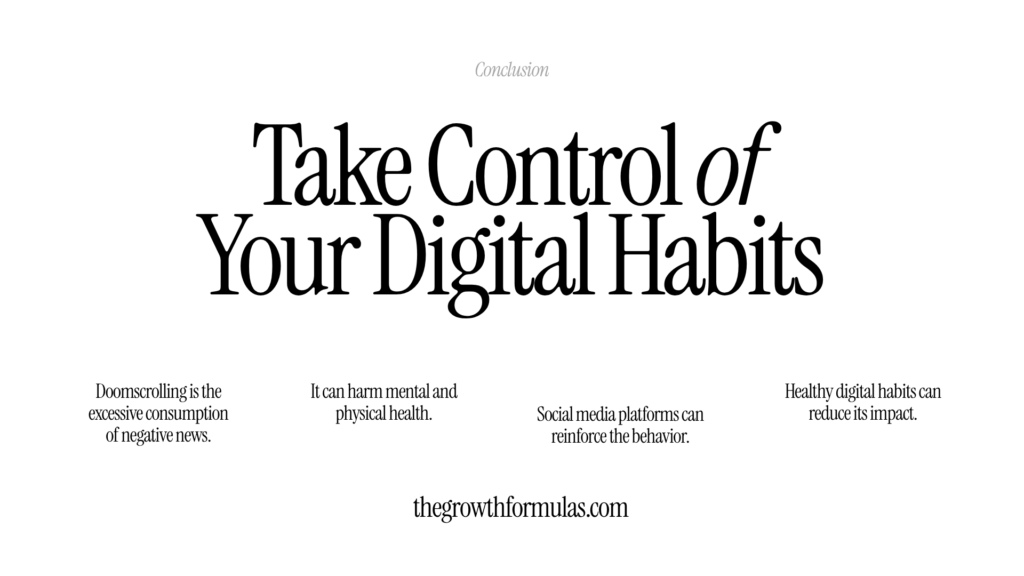
Doomscrolling can quietly steal your time, focus, and peace of mind. The goal isn’t to stop using technology altogether – it’s to use it intentionally instead of letting it control you.
Start with one small change today. Turn off a few notifications, set a screen-time limit, or leave your phone in another room for an hour. Small habits repeated consistently can lead to lasting improvements in your mental well-being.
Remember, your attention is valuable. Spend it on things that help you grow- not just on endless scrolling.
Blog Sources
World Health Organization (WHO) – Mental health information
https://www.who.int/health-topics/mental-healthAmerican Academy of Sleep Medicine (AASM) – Screen time and sleep recommendations
https://aasm.org/