Why You Overeat: Understanding the 11 Real Reasons Behind Eating More Than You Need
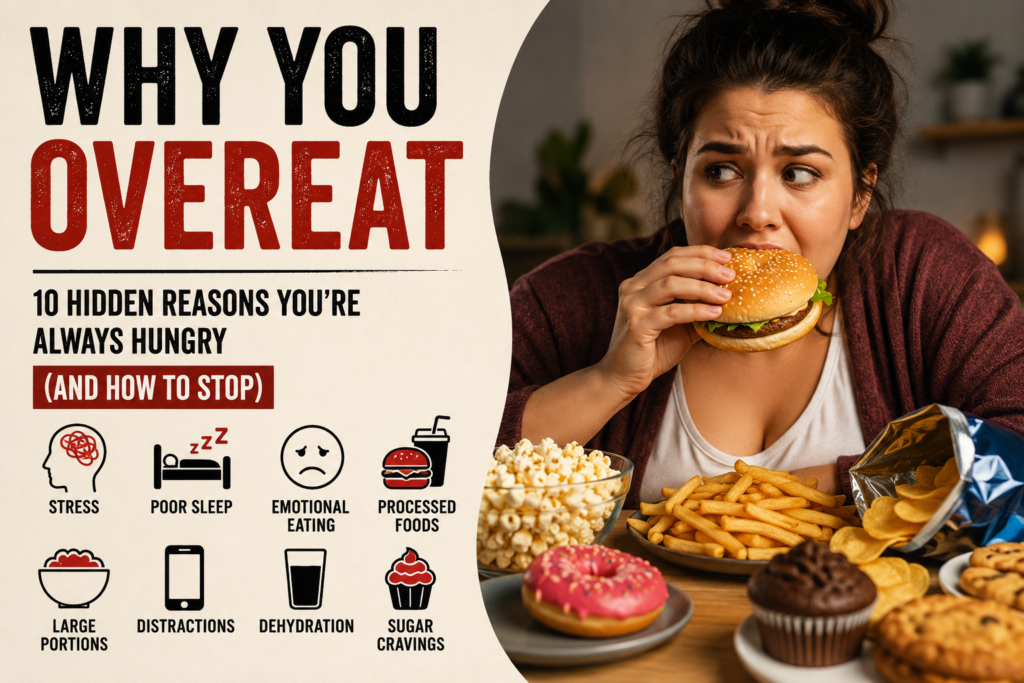
Why You Overeat
Have you ever finished a meal, felt completely full, and then reached for a bag of chips or a slice of cake anyway? If so, you’re not alone. Overeating is something almost everyone experiences from time to time. While many people blame a lack of willpower, the truth is that overeating is often influenced by a combination of biology, emotions, habits, and the environment around us.
Understanding why you overeat is the first step toward building a healthier relationship with food. Instead of feeling guilty after eating too much, learning what triggers overeating can help you make lasting changes.
What Is Overeating?
Overeating means consuming more food than your body needs for energy. It can happen during a single meal or through frequent snacking throughout the day. Occasional overeating is normal, especially during holidays or celebrations, but making it a regular habit can contribute to weight gain and increase the risk of health conditions such as obesity, type 2 diabetes, heart disease, and digestive problems.
1. You’re Eating Because of Emotions, Not Hunger
One of the biggest reasons people overeat is emotional eating. Food often becomes a source of comfort during stressful or emotional moments.
You may find yourself eating when you’re:
- Feeling stressed at work
- Lonely or bored
- Anxious about the future
- Sad or disappointed
- Celebrating good news
High-fat and sugary foods temporarily activate the brain’s reward system, making you feel better for a short time. However, the emotional relief doesn’t last, and overeating can eventually lead to guilt or frustration.
How to Manage Emotional Eating
Before reaching for food, ask yourself:
- Am I physically hungry?
- What emotion am I feeling right now?
- Is there another way to deal with this emotion?
Taking a short walk, calling a friend, journaling, or practicing deep breathing can often help.
2. You’re Eating Too Fast
Your brain needs about 20 minutes to recognize that your stomach is full. If you eat quickly, you can consume hundreds of extra calories before your body signals that you’ve had enough.
Fast eating often happens during:
- Busy workdays
- Watching television
- Scrolling on your phone
- Eating while driving
Try This Instead
- Put your fork down between bites.
- Chew food thoroughly.
- Drink water during meals.
- Take at least 20 minutes to finish your meal.
3. Large Portion Sizes Trick Your Brain
Restaurants and packaged foods have become much larger over the years. Bigger portions make people believe they should eat more, even if they’re already satisfied.
Research consistently shows that people tend to consume more food simply because more food is available.
Portion Control Tips
- Use smaller plates.
- Avoid eating directly from large packages.
- Store leftovers before sitting down to eat.
- Fill half your plate with vegetables.
4. You’re Not Eating Enough Protein
Protein helps you stay full longer by slowing digestion and influencing hormones that regulate appetite.
When meals are low in protein, hunger often returns much sooner.
Good protein sources include:
- Eggs
- Greek yogurt
- Chicken
- Fish
- Lentils
- Beans
- Tofu
- Cottage cheese
Including protein with every meal may reduce unnecessary snacking later.
5. Poor Sleep Increases Hunger
Lack of sleep doesn’t just make you tired-it also affects hormones that control hunger.
Sleeping too little can:
- Increase hunger hormones
- Reduce feelings of fullness
- Increase cravings for sugary and high-calorie foods
Most adults should aim for 7-9 hours of quality sleep each night.
6. You’re Surrounded by Food Cues
Modern life constantly encourages eating.
Examples include:
- Food advertisements
- Snacks on your office desk
- Candy near checkout counters
- Food delivery notifications
- Social media food videos
These external cues can trigger cravings even when you’re not hungry.
Reducing visual temptations can help lower unnecessary eating.
7. Highly Processed Foods Are Designed to Be Hard to Resist
Many packaged foods combine sugar, salt, and fat in ways that make them extremely appealing.
These foods often provide lots of calories but very little fiber or protein, making it easier to overeat.
Examples include:
- Chips
- Cookies
- Candy
- Sugary cereals
- Fast food
- Ice cream
Choosing more whole foods can naturally improve fullness.
8. You’re Distracted While Eating
Eating while watching TV, working, or scrolling through social media reduces awareness of how much you’re consuming.
Mindless eating often leads to larger portions without realizing it.
Practice mindful eating by:
- Sitting at a table
- Removing distractions
- Paying attention to taste and texture
- Stopping when comfortably satisfied
9. Restrictive Dieting Can Backfire
Extremely strict diets often create intense cravings.
When favorite foods are completely forbidden, people frequently end up overeating once they finally have access to them.
Instead of eliminating foods forever, aim for balance and moderation.
10. You’re Mistaking Thirst for Hunger
Sometimes your body sends similar signals for hunger and dehydration.
Before eating a snack, try drinking a glass of water and waiting 10-15 minutes.
You may discover you were simply thirsty.
Long-Term Effects of Frequent Overeating
Regular overeating may increase the risk of:
- Weight gain
- Obesity
- Type 2 diabetes
- High blood pressure
- Heart disease
- Fatty liver disease
- Digestive discomfort
- Low energy levels
The earlier unhealthy eating habits are addressed, the easier they are to change.
Practical Tips to Stop Overeating
Building healthier habits doesn’t require perfection. Small, consistent changes often make the biggest difference.
Try these strategies:
- Eat regular meals instead of skipping them.
- Include protein and fiber in every meal.
- Drink enough water throughout the day.
- Sleep at least 7–9 hours each night.
- Practice mindful eating.
- Keep healthy snacks nearby.
- Reduce stress through exercise, meditation, or hobbies.
- Avoid eating directly from large containers.
- Listen to your body’s hunger and fullness signals.
When Should You Seek Professional Help?
If overeating happens frequently, feels out of control, or causes emotional distress, it may be helpful to speak with a healthcare professional or registered dietitian. Persistent binge eating or emotional eating can sometimes be linked to underlying mental health conditions that benefit from professional support.
Final Thoughts
Overeating isn’t simply about lacking self-control. It’s often the result of emotional triggers, poor sleep, oversized portions, processed foods, stress, and daily habits. By understanding the reasons behind your eating patterns, you can make gradual, sustainable changes that improve both your physical and mental well-being.
Rather than focusing on strict diets or guilt, aim to build healthier routines that nourish your body and support long-term health. Every mindful choice you make is a step toward a better relationship with food.
my other blogs…. click and read.>>>
Why you Feel Tired All the Time
How to Improve Memory Naturally Without Supplements 11 Science-Backed Tips
Why Successful People Read Every Day: 7 Powerful Reasons You Should Too
5 Daily Habits That Rewire Your Brain for Success (Backed by Science)
How to Build Self-Discipline When You Have No Motivation