

How to Keep Your Teeth and Gums Healthy: 15 Simple Tips for a Stronger Smile
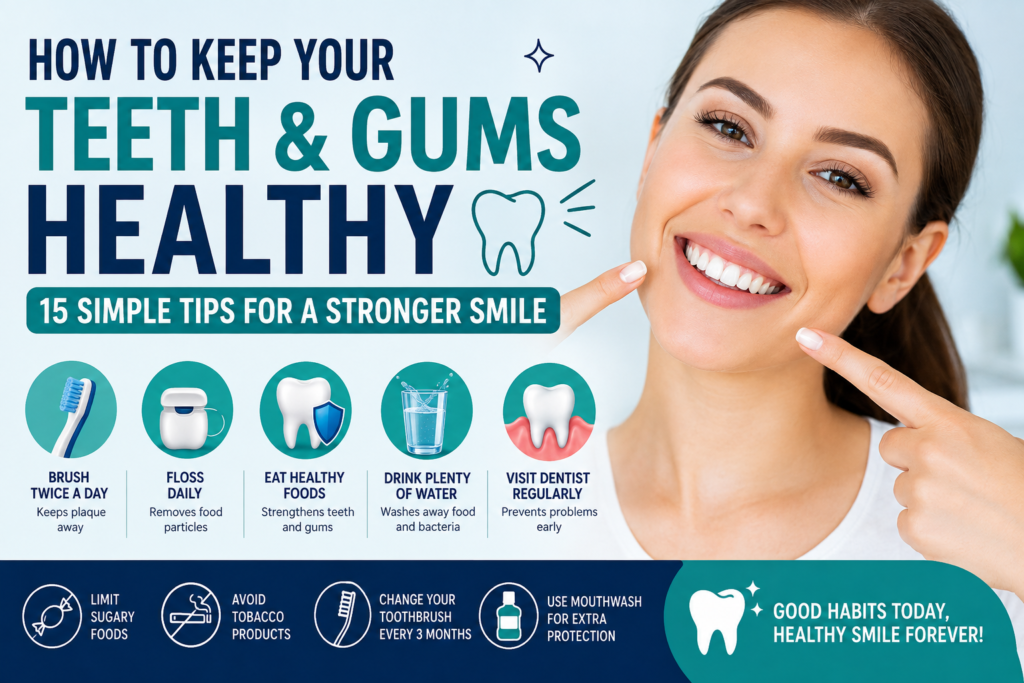
How to Keep Your Teeth and Gums Healthy: 15 Simple Tips for a Stronger Smile
A healthy smile is more than just a cosmetic asset > it’s a window into your overall health. Your mouth is home to millions of bacteria, and while most are harmless, poor oral hygiene can allow harmful bacteria to reach levels that lead to tooth decay, gum disease, and even bad breath. Research has also linked oral health to broader health conditions, including heart disease, diabetes, and respiratory infections.
The good news is that maintaining healthy teeth and gums doesn’t require anything complicated or expensive. With a handful of consistent habits, you can protect your smile for life. Below are 15 simple, practical tips to help you build (or improve) a solid oral care routine.
How to Keep Your Teeth and Gums Healthy: 15 Simple Tips for a Stronger Smile >>>>
1. Brush Twice a Day The Right Way
This might sound obvious, but many people brush incorrectly or too quickly. Dentists recommend brushing for a full two minutes, twice a day, using a soft-bristled toothbrush and fluoride toothpaste. Hold your brush at a 45-degree angle to your gums and use gentle, circular motions rather than aggressive back-and-forth scrubbing, which can wear down enamel and irritate gums over time.
Don’t forget to brush your tongue as well it harbors bacteria that contribute to bad breath and plaque buildup.
2. Don’t Skip Flossing
Brushing alone only cleans about 60% of your tooth surfaces. Flossing removes food particles and plaque from between your teeth and along the gumline, areas your toothbrush simply can’t reach. Make it a daily habit, ideally before bed, so debris doesn’t sit between your teeth overnight. If traditional floss feels awkward, try floss picks, water flossers, or interdental brushes instead.
3. Use Mouthwash for an Extra Layer of Protection
An antimicrobial or fluoride mouthwash can reduce plaque, freshen breath, and reach areas that brushing and flossing might miss. Look for one with the ADA (or your country’s equivalent) seal of approval, and choose an alcohol-free formula if you have sensitive gums or a dry mouth, since alcohol-based rinses can be drying and irritating.
4. Choose the Right Toothbrush
A worn-out or overly stiff toothbrush can do more harm than good. Replace your toothbrush (or electric brush head) every three to four months, or sooner if the bristles look frayed. Soft bristles are generally best for most people, as medium or hard bristles can erode enamel and cause gum recession over time. Electric toothbrushes can also be a worthwhile investment -> studies suggest they may remove plaque more effectively than manual brushing for many users.
5. Watch Your Sugar Intake
Sugar is one of the biggest culprits behind tooth decay. When you consume sugary foods or drinks, the bacteria in your mouth feed on the sugar and produce acid that erodes enamel. This doesn’t mean you need to eliminate sweets entirely, but try to limit sugary snacks and beverages, especially between meals, and rinse your mouth with water afterward if brushing isn’t immediately possible.
6. Limit Acidic Foods and Drinks
Citrus fruits, soda, wine, and sports drinks are highly acidic and can gradually wear away enamel, making teeth more prone to sensitivity and decay. You don’t have to avoid them completely, but try to consume them in moderation, use a straw when drinking acidic beverages, and avoid brushing immediately afterward (wait at least 30 minutes, since brushing right after acid exposure can actually scrub away softened enamel).
7. Drink Plenty of Water
Water is essential for a healthy mouth. It helps rinse away food particles and bacteria, keeps you hydrated, and supports saliva production. Saliva is your mouth’s natural defense system -> it neutralizes acids and helps repair early enamel damage. Drinking fluoridated tap water, where available, offers an added layer of cavity protection.
8. Eat a Tooth-Friendly Diet
What you eat has a direct impact on your oral health. Crunchy fruits and vegetables like apples, carrots, and celery help scrub away plaque naturally and stimulate saliva flow. Dairy products such as cheese and yogurt are rich in calcium and phosphates, which help strengthen enamel. Leafy greens, nuts, and lean proteins also support healthy gums and teeth. Try to build meals around whole, nutrient-dense foods rather than processed, sugary options.
9. Don’t Use Your Teeth as Tools
It might be tempting to rip open a package or crack a nut with your teeth, but this habit puts unnecessary stress on your enamel and can lead to chips, cracks, or fractures. Keep scissors or bottle openers handy instead, and save your teeth for chewing food.
10. Quit Smoking and Limit Tobacco Use
Tobacco use whether smoking or chewing – is one of the leading contributors to gum disease, tooth staining, bad breath, and oral cancer. Smokers are significantly more likely to develop gum disease and lose teeth than non-smokers. Quitting can dramatically improve not just your oral health, but your overall wellbeing. If you need help quitting, talk to your doctor or dentist about resources and support options.
11. Visit Your Dentist Regularly
Even with excellent at-home care, professional checkups are essential. Dentists can spot early signs of cavities, gum disease, and other issues before they become painful or costly to treat. Most people benefit from a checkup and professional cleaning every six months, though your dentist may recommend a different schedule based on your individual needs. Don’t wait for pain to schedule a visit many dental problems are silent in their early stages.
12. Address Teeth Grinding (Bruxism)
If you wake up with jaw pain, headaches, or notice your teeth looking worn down, you may be grinding your teeth at night, often due to stress. Over time, bruxism can wear down enamel, cause fractures, and lead to jaw problems. A custom-fitted night guard from your dentist can protect your teeth, and addressing underlying stress through relaxation techniques or counseling may help reduce the habit.
13. Protect Your Teeth During Sports
If you or your children play contact sports, wearing a mouthguard is a simple way to prevent chipped, cracked, or knocked-out teeth. Custom-fitted mouthguards from your dentist offer the best protection and comfort, though store-bought “boil and bite” versions are a reasonable alternative if cost is a concern.
14. Pay Attention to Gum Health, Not Just Teeth
Healthy gums should be pink, firm, and free of bleeding. If your gums bleed when you brush or floss, look swollen, or have started to recede, these can be early signs of gingivitis, the initial stage of gum disease. Left untreated, gingivitis can progress to periodontitis, a more serious condition that can lead to tooth loss. Don’t ignore these warning signs – mention them to your dentist as soon as you notice them.
15. Manage Dry Mouth
Saliva plays a critical role in protecting your teeth, so a chronically dry mouth (caused by certain medications, medical conditions, or dehydration) can raise your risk of cavities and gum disease. If you experience persistent dry mouth, try sipping water throughout the day, chewing sugar-free gum to stimulate saliva flow, and talk to your doctor or dentist if the issue persists, as they may recommend a saliva substitute or adjust any contributing medications.How to Keep Your Teeth and Gums Healthy: 15 Simple Tips for a Stronger Smile
Foods and Habits That Can Harm Your Teeth
Sugary and starchy foods candy, soda, chips, and pastries feed the bacteria in your mouth, which then produce acids that erode enamel and lead to cavities. Acidic foods and drinks like citrus fruits, wine, and sports drinks can wear down enamel over time, while sticky foods such as caramel or dried fruit cling to teeth and prolong bacterial exposure. Beyond diet, habits like chewing ice, biting your nails, using teeth to open packages, or grinding your teeth at night (bruxism) can chip or crack enamel. Frequent snacking without brushing, smoking or chewing tobacco, and excessive alcohol consumption also take a toll, staining teeth, drying out your mouth, and increasing the risk of gum disease. Being mindful of these foods and habits and rinsing with water or brushing after indulging- can go a long way toward protecting your smile.How to Keep Your Teeth and Gums Healthy: 15 Simple Tips for a Stronger Smile and Gums Healthy
Common Oral Hygiene Mistakes to Avoid
Even well-intentioned oral care routines can fall short if you’re making a few common mistakes. Brushing too hard or using a hard-bristled toothbrush can wear down enamel and cause gums to recede rather than getting teeth cleaner. Rushing through brushing doing it for 30 seconds instead of the recommended two minutes leaves plaque behind, especially along the gumline and in hard-to-reach back teeth. Skipping flossing is another frequent misstep, since brushing alone misses nearly 40% of tooth surfaces. Brushing immediately after eating acidic foods or drinks can actually damage softened enamel rather than protect it -it’s better to wait about 30 minutes. Many people also forget to replace their toothbrush every three to four months, continuing to use frayed, ineffective bristles, or they skip mouthwash and tongue cleaning altogether, allowing bacteria to linger. Finally, putting off regular dental checkups until something hurts often means small, easily treatable issues turn into bigger, costlier problems. Correcting these small habits can make a big difference in long-term oral health.How to Keep Your Teeth and Gums Healthy: 15 Simple Tips for a Stronger Smile
When Should You See a Dentist?
You should see a dentist for a routine checkup and cleaning every six months, even if your teeth feel fine, since many problems develop silently in their early stages. Beyond regular visits, certain signs call for prompt attention: persistent tooth pain or sensitivity, bleeding or swollen gums, bad breath that won’t go away, loose or shifting teeth, visible cavities or dark spots, a cracked or chipped tooth, mouth sores that don’t heal within two weeks, jaw pain or clicking, and dry mouth that persists despite drinking water. Pregnant women, people with diabetes, and those starting new medications should also check in with their dentist, since these factors can affect oral health. In short, don’t wait for pain early detection through regular visits and prompt attention to warning signs is the best way to avoid serious dental problems down the road.How to Keep Your Teeth and Gums Healthy: 15 Simple Tips for a Stronger Smile Gums Healthy
Simple Daily Oral Care Routine
A simple daily oral care routine doesn’t need to be complicated to be effective. Start each morning by brushing your teeth for two minutes with a soft-bristled toothbrush and fluoride toothpaste, then rinse with an antimicrobial or fluoride mouthwash. Floss once a day many people prefer nighttime, since it removes food particles and plaque that have built up throughout the day before you sleep. Brush again before bed, making sure to also gently clean your tongue to reduce bacteria and freshen breath. Throughout the day, drink plenty of water to rinse away food debris and keep saliva flowing, and try to avoid snacking mindlessly between meals. If you chew gum, choose a sugar-free option to help stimulate saliva production. Following this simple routine brush, floss, rinse, and hydrateconsistently every day is one of the easiest ways to keep your teeth and gums healthy for the long term.Keep Your Teeth and Gums Healthy
Building a Routine That Sticks
The key to long-term oral health isn’t perfection – it’s consistency. Rather than trying to overhaul your entire routine overnight, start by focusing on the basics: brushing twice a day, flossing daily, and keeping up with regular dental visits. Once those habits feel automatic, layer in the additional tips above, such as dietary adjustments or protective measures like mouthguards.
It’s also worth remembering that oral health is connected to your overall health. Gum disease has been associated with an increased risk of heart disease, and conditions like diabetes can make you more susceptible to oral infections. Taking care of your teeth and gums isn’t just about a nice smile – it’s an investment in your whole-body health.
Final Thoughts
A strong, healthy smile is achievable for almost everyone with the right daily habits. Brush and floss consistently, eat a balanced diet, stay hydrated, avoid harmful habits like smoking, and don’t skip your regular dental checkups. Small, consistent actions add up over time, helping you avoid painful and expensive dental problems down the road.
If it’s been a while since your last dental visit, there’s no better time than now to schedule one. Your future smile will thank you.
This article is for general informational purposes only and is not a substitute for professional dental advice. Please consult your dentist or healthcare provider for guidance specific to your oral health needs.How to Keep Your Teeth and Gums Healthy: 15 Simple Tips for a Stronger Smile
my other blogs…. click and read.>>>
Best Foods for Pregnancy: A Complete Nutrition Guide for Expecting Mothers
Best Foods for High Blood Pressure: What to Eat, What to Avoid, and Why
Best Food for Gut Health: A Complete Guide to Nourishing Your Microbiome
Best Foods for Fatty Liver: A Science-Backed Guide to Healing Your Liver Through Diet
Best Foods for High Cortisol: A Nutrition Guide for Stress Management
Healthy Foods for Kidney Health: A Complete Guide
Ashwagandha Benefits 9 : The Ancient Herb Backed by Modern Science
Why Budgeting Matters: 15 Smart Budgeting Tips Every Beginner Should Know
11 Signs You Might Be Low on Vitamin D
Why you Feel Tired All the Time
How to Improve Memory Naturally Without Supplements 11 Science-Backed Tips
Why Successful People Read Every Day: 7 Powerful Reasons You Should Too
5 Daily Habits That Rewire Your Brain for Success (Backed by Science)
How to Build Self-Discipline When You Have No Motivation
Why You Overeat: Understanding the 11 Real Reasons Behind Eating More Than You Need
25 Best Free AI Tools Online You Can Use in 2026
https://youtube.com/@our_black_world?si=4lNGPIFirRkux6z8