
Stop Overthinking : How to Stop Overthinking: 11 Powerful Ways
INTRO…
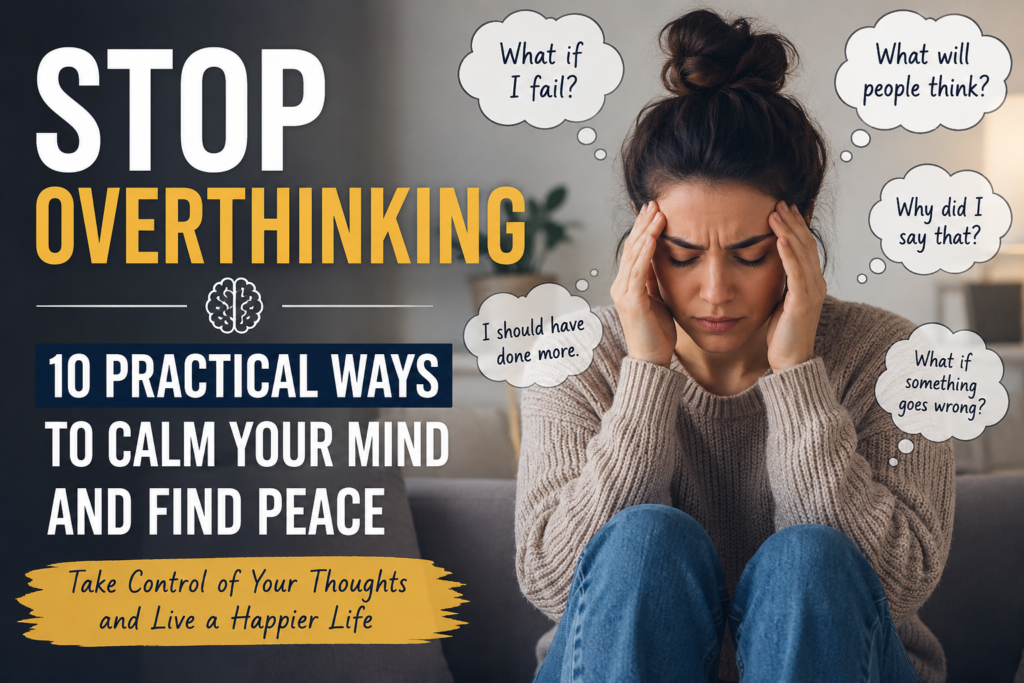
Overthinking is a common problem that affects many people. It means dwelling on problems or fears without making progress. When you overthink, your mind goes into a loop of worries, doubts, and what-ifs. This mental habit can make small issues feel overwhelming and can stop you from enjoying life. The good news is that overthinking is a skill you can change. By understanding why it happens and applying some practical solutions, you can quiet your mind and take back control.

Why Overthinking Hurts You
Overthinking often starts with a small worry that grows into a big mental problem. For example, you might worry about an upcoming meeting, and then imagine every possible way it could go wrong. Your mind replaying the scenario again and again can make you anxious, stressed, or even keep you up at night. Here are some ways overthinking can hurt you:
- Paralysis by Analysis: Constantly analyzing every detail can make decisions feel impossible. When you second-guess yourself, you may end up doing nothing at all.
- Increased Anxiety and Stress: Overthinking usually adds to worry. Instead of solving a problem, it amplifies anxiety. You might start feeling tense, irritable, or fatigued.
- Poor Sleep: If your brain doesn’t shut off at bedtime, you might have trouble falling asleep or staying asleep. Tossing and turning over the same thoughts can leave you exhausted.
- Missing the Present Moment: Constantly replaying the past or fearing the future can take away the ability to enjoy what’s happening right now. You might find yourself distracted or unable to focus on the task at hand.
Understanding that overthinking is a cycle is the first step. When a negative thought pops up, your mind grabs on to it and spirals. It’s like a broken record playing the same worry over and over. This cycle can be broken, and here’s how.
Why We Overthink
Before jumping into solutions, it’s helpful to know why overthinking happens. Often, it’s our brain’s way of trying to solve problems or avoid pain. Sometimes we overthink because:
- We feel anxious about uncertainty and want to feel prepared for every outcome.
- We want to be perfect or avoid mistakes, so we replay decisions repeatedly.
- We have a habit of worrying, which can come from past experiences or even hearing others worry a lot.
- We feel in control when we think through every detail, even if it’s stressful.
Recognizing the cause of your overthinking can help you choose the right strategy. For example, if you overthink because you fear making mistakes, practicing self-compassion (being kind to yourself) can help. If uncertainty scares you, learning to accept “not knowing” can ease the pressure.

The Solution: Practical Steps to Stop Overthinking
Here are some effective techniques to help you break the overthinking cycle and regain peace of mind. You may need to try a few methods to find what works best for you.
1. Acknowledge and Label Your Thoughts.
Notice when you’re overthinking. Pause and say to yourself, “I’m overthinking right now.” Naming the habit can take some of its power away. It allows you to step back instead of feeling trapped by your thoughts.
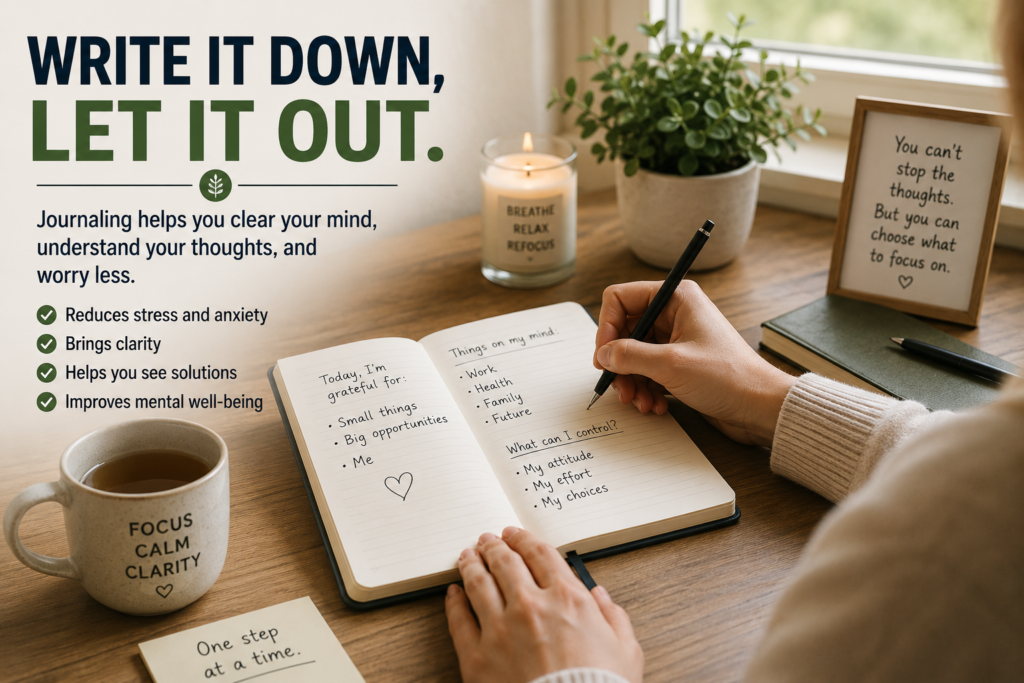
2. Write Down Your Worries
Getting your thoughts out of your head and onto paper (or a notes app) can be incredibly freeing. Write exactly what you’re thinking or worried about. Once it’s written, you might see the problem more clearly or feel some relief by simply acknowledging it. Journaling can help you understand patterns in your thinking and reduce mental clutter.
3. Set Aside ‘Worry Time.’
Give yourself permission to worry, but on a schedule. For example, set a 10–15 minute “worry time” each day (perhaps in the evening). During this time, you can think freely about whatever is on your mind. Outside of that time, if a worry pops up, remind yourself, “This is not the time to worry. I will deal with it later.” This practice contains the worry to a small window and helps keep your mind focused when you need to be productive or relaxed.
4. Challenge Your Thoughts.
Overthinking often comes with negative or unrealistic thoughts. Ask yourself: “Is this worry real? Will it matter in a month or a year? What evidence do I have?” If a fear is irrational or blown out of proportion, gently challenge it. For example, if you’re worrying about flunking a presentation, consider the facts: you’ve prepared, you’ve succeeded before, and most audiences are friendly. Challenging thoughts helps you break the pattern of catastrophizing (imagining the worst).
5. Focus on What You Can Control.
Make a list of aspects of the situation that you can do something about versus things you can’t. For worries that you can act on, create a simple action plan. For worries beyond your control, practice acceptance (see the next point). By taking small actions (even making a phone call or planning ahead), you reduce the sense of helplessness that fuels overthinking.
6. Accept Imperfection and Uncertainty.
Part of overthinking is wanting a perfect outcome or complete certainty. Remind yourself that nobody has all the answers and that mistakes are part of learning. Say to yourself, “It’s okay not to know everything” or “I will do the best I can.” Accepting uncertainty can be liberating and often stops the mental chase after impossible perfection.
7. Practice Mindfulness and Present-Moment Awareness.
Techniques like deep breathing, meditation, or simply paying attention to your senses can break the overthinking loop. For instance, take a few slow breaths, focusing only on the sensation of breathing. Or do a quick 5-minute grounding exercise: notice five things you can see, four you can touch, three you can hear, two you can smell, and one you can taste. These exercises bring your mind into the present, where you have more control.

8. Engage in Physical Activity.
Exercise is a great way to reset your mind. Go for a walk, do some yoga, or even clean the house. Physical movement releases stress and can stop your thoughts from spinning. Often, a change of environment or a bit of exercise can give you a new perspective on your problem.

9. Talk It Out.
Sometimes simply discussing what you’re overthinking about with someone else helps. A friend, family member, or therapist can offer support or a different viewpoint. They might reassure you that your worries are manageable or point out angles you didn’t see.
10. Establish Healthy Daily Routines.
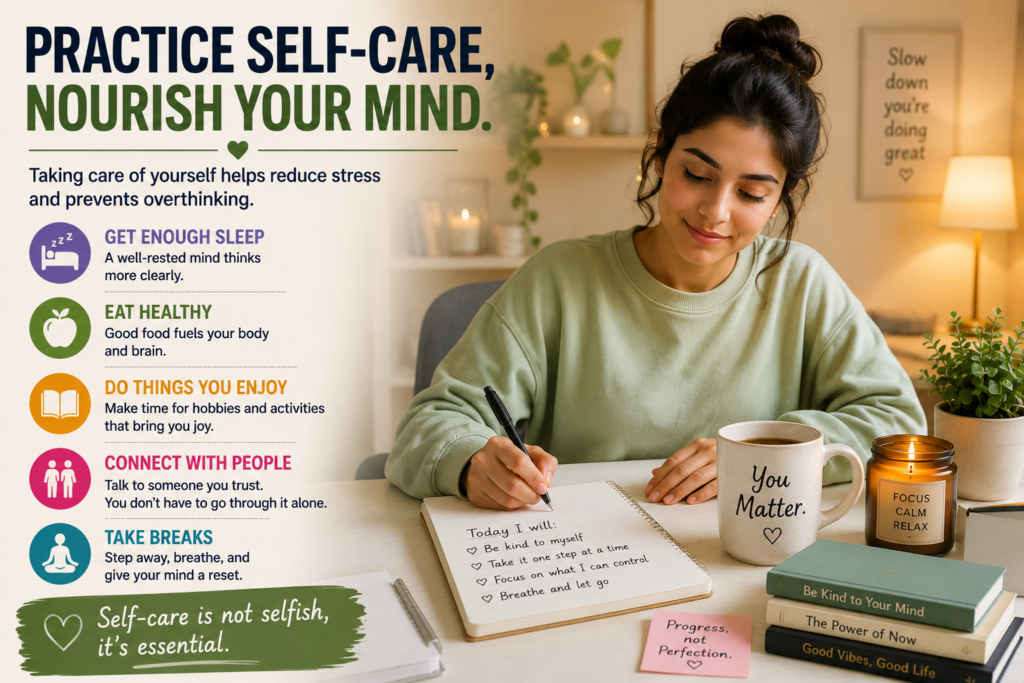
Good sleep, balanced meals, and time for relaxation make your mind and body more resilient. When you’re well-rested and relaxed, it’s easier to handle stress without spiraling into overthinking. Try a calming bedtime routine (like reading or a warm bath) to prevent nighttime rumination.

Taking Control of Your Thoughts
Remember, stopping overthinking won’t happen overnight. It’s a skill that takes practice. You may notice your mind trying to slip into old habits, especially in stressful times. When that happens, revisit the steps above: label the thought, challenge it, and redirect your focus. Over time, these techniques will become second nature.
Overthinking often feels like an uncontrollable problem, but with patience and practice, you can train your mind to break free from worry loops. By acknowledging the problem and actively using these solutions, you can transform how you handle stress and live a calmer, more present life.
Take the First Step Today: The next time you catch yourself overthinking, try writing down your thoughts or taking a few deep breaths. Each time you use one of these strategies, you’re strengthening your ability to stop overthinking in its tracks.
I personally struggled with overthinking for a long time. I would constantly worry about the future, replay past mistakes, and create problems in my mind that never actually happened. It affected my focus, sleep, and overall peace of mind. After practicing the techniques mentioned in this article-such as journaling, mindfulness, focusing on what I can control, and taking action instead of overanalyzing – I noticed a significant improvement. My stress levels decreased, I started making decisions more confidently, and I felt much calmer and happier in my daily life. BYY..
MY Last Thought is…
Overthinking can steal your happiness, confidence, and peace of mind if you let it control your life. The good news is that you can break this habit by taking small, consistent steps every day. I personally used many of the techniques shared in this article, and they helped me reduce stress, think more clearly, and focus on what truly matters. Remember, progress is more important than perfection. Start with one small change today, and over time you’ll notice a calmer mind and a happier life.
For more mental health and self-improvement tips, visit The Growth Formulas.

my other blogs…. click and read.>>>
Why you Feel Tired All the Time
How to Improve Memory Naturally Without Supplements 11 Science-Backed Tips
Why Successful People Read Every Day: 7 Powerful Reasons You Should Too
5 Daily Habits That Rewire Your Brain for Success (Backed by Science)
How to Build Self-Discipline When You Have No Motivation
Why You Overeat: Understanding the 11 Real Reasons Behind Eating More Than You Need
Best Websites to Earn Money Online
https://youtube.com/@our_black_world?si=4lNGPIFirRkux6z8
https://pin.it/1K8v4BH0I
Why Budgeting Matters: 15 Smart Budgeting Tips Every Beginner Should Know

2 Comments